
Slot Volatility Explained: Why Your $100 Bankroll Acts Differently
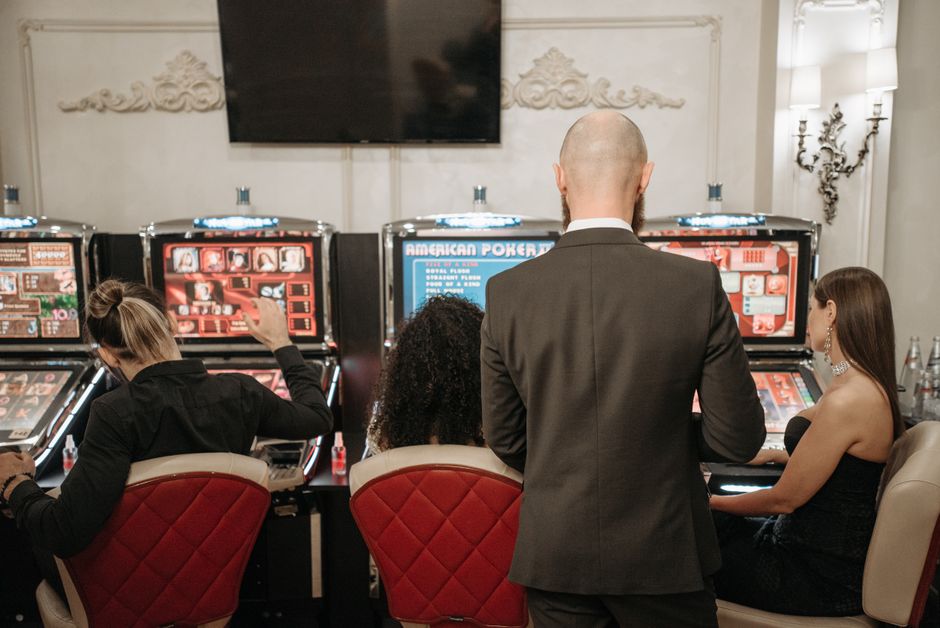
Two players sit down at the same online slot with the same $100 bankroll. One grinds for three hours and cashes out $340. The other is broke in eleven minutes. Same game, same stake, same luck? Not quite. The difference almost always comes down to volatility — the single most misunderstood number in iGaming, and the one that actually determines whether your session feels like a slow bleed or a rollercoaster.
If you've ever wondered why Book of Dead eats bankrolls alive while Blood Suckers feels like watching paint dry, this is the article you needed before you deposited.
What Volatility Actually Means (Beyond the Marketing Talk)
Volatility, sometimes called variance, describes how a slot distributes its payouts over time. It's not the same as RTP. RTP — return to player — is the long-term percentage a game pays back, usually between 94% and 97%. Volatility is the shape of the road you travel to get there.
A low-volatility slot pays small amounts frequently. Think 3-reel classics like Starburst (96.1% RTP) or Blood Suckers, where you'll regularly hit 2x to 10x your stake. High-volatility slots like Money Train 4 or San Quentin pay rarely, but when they do, they can produce 10,000x to 50,000x wins. The trade-off is brutal: you might spin 500 times without a meaningful hit.
- Low volatility: frequent small wins, longer sessions, lower max payout potential
- Medium volatility: balanced rhythm, decent hit frequency, moderate upside
- High volatility: long dry spells, rare huge wins, brutal on small bankrolls
Here's the practical consequence: a slot with 96% RTP and extreme volatility behaves nothing like one with 96% RTP and low volatility, even though the math says they're equally "fair."
The Bankroll Math Most Players Ignore
Volatility doesn't just change how often you win — it changes how much bankroll you need to survive the swings. A common rule of thumb among experienced players is to have at least 200 to 300 times your spin size available for high-volatility games. Spinning $1 on Money Train 4 with only 100 units? You're statistically likely to bust before the bonus round even triggers.
Consider two real-world scenarios:
- $100 bankroll, $1 spins, low-volatility slot. With a hit frequency around 30%, you'll see frequent small returns. Sessions of 2–4 hours are realistic if you don't tilt.
- $100 bankroll, $1 spins, high-volatility slot. Hit frequency might be 15–20%. Long streaks of 30+ dead spins are normal. Expect to bust within 30–60 minutes most sessions.
Same money, radically different experience. If a casino streamer shows a $20,000 win on a $2 spin and you deposit $50 expecting the same, volatility is the reason you walked away empty while they walked away rich.
Volatility in Table Games and Poker
Slots aren't the only place variance bites. In blackjack played optimally, the house edge is around 0.5%, but variance is real — you'll have losing sessions regardless of skill. In Texas Hold'em, a player who gets their money in as a 70% favorite still loses 30% of the time. That's not bad play; that's poker.
Cash game poker has lower variance than tournaments. A multi-table tournament grinder might play 100 tournaments before showing a profit, because payouts are top-heavy — one final table pays for dozens of early exits. That structure mirrors high-volatility slot design. More background can be found at XOCDIA88.
For bettors, variance shows up in odds. A -300 favorite wins roughly 75% of the time. Bet ten of them and you'll still lose two or three. Long losing streaks on heavy favorites are mathematically normal, not evidence of a rigged book.
How to Use Volatility to Your Advantage
Once you understand variance, you can deliberately shape your session. Here's a practical approach:
- Match slot volatility to session goal. Want a long, chill evening? Play low volatility. Chasing a 1000x screenshot? Accept that busting is the likely outcome.
- Size your bets off your bankroll, not your ambition. Divide bankroll by 250 and use that as your spin size for high-volatility games. For low volatility, 100 units is often enough.
- Set a stop-loss and a win target before you spin. Volatility punishes players who "just one more spin" because of sunk-cost thinking.
- Use bonus features strategically. On high-volatility slots, buying free spins (where legal) shifts variance to an all-or-nothing decision — it can massively amplify either gain or loss.
- Track sessions over weeks, not days. One session tells you nothing. Fifty sessions show your true pattern.
Professional players don't eliminate variance — they plan around it. The formula for expected loss per hour is simple: spins per hour × stake × (1 − RTP). Play 600 spins per hour at $1 on a 96% slot, and your theoretical loss is $24 an hour. Volume is what makes casinos profitable; understanding variance is what keeps you from being the volume.
The Psychology of Riding Swings
Volatility messes with your head more than your wallet. A 20-spin dead streak sparks the urge to increase stakes to "recover." That's exactly backwards. Increasing stake during a downswing multiplies your losses without improving expected value.
High-volatility slots are also where tilt happens fastest. The absence of regular feedback makes players irrational — they change games, spin faster, or switch to table games where they think they'll "win it back." None of these decisions change the math.
The players who stick around long-term treat volatility as a known cost of entry. They pick sessions with eyes open, accept that losing streaks are billed into the experience, and treat any big win as an anomaly rather than a forecast. A good place to continue is XOCDIA 88.
Final Thought: Respect the Ride
Every dollar you put into a slot, blackjack table, or poker seat is subject to variance, and no amount of intuition changes that. What you can control is which volatility level fits your bankroll, your time horizon, and your tolerance for dry spells. Choose high volatility only when you can afford the failure mode. Choose low volatility when you want your money to last. And never confuse a hot session with a fixed game — the math doesn't care about your last spin.
Get comfortable with volatility, and you stop gambling blind. You start gambling informed — which is the only kind of edge a recreational player realistically has.

4 Comments